
Track condition and alignment
Tracks are checked for dents, spread, loose lag screws, and gaps at the joints. If the track is pinched or pulled out of plumb, new rollers can still bind.
Serving Sugar Land, Texas & surrounding areas
Calls answered around the clock
Garage door roller replacement · Stafford
Describe the noise, sticking, or wobble once and we'll connect you with a local contractor who can replace the rollers and get your door running smoothly again.
CALL NOW: (346) 226-2846Describe the symptoms once
Local contractor connection
Discuss options directly
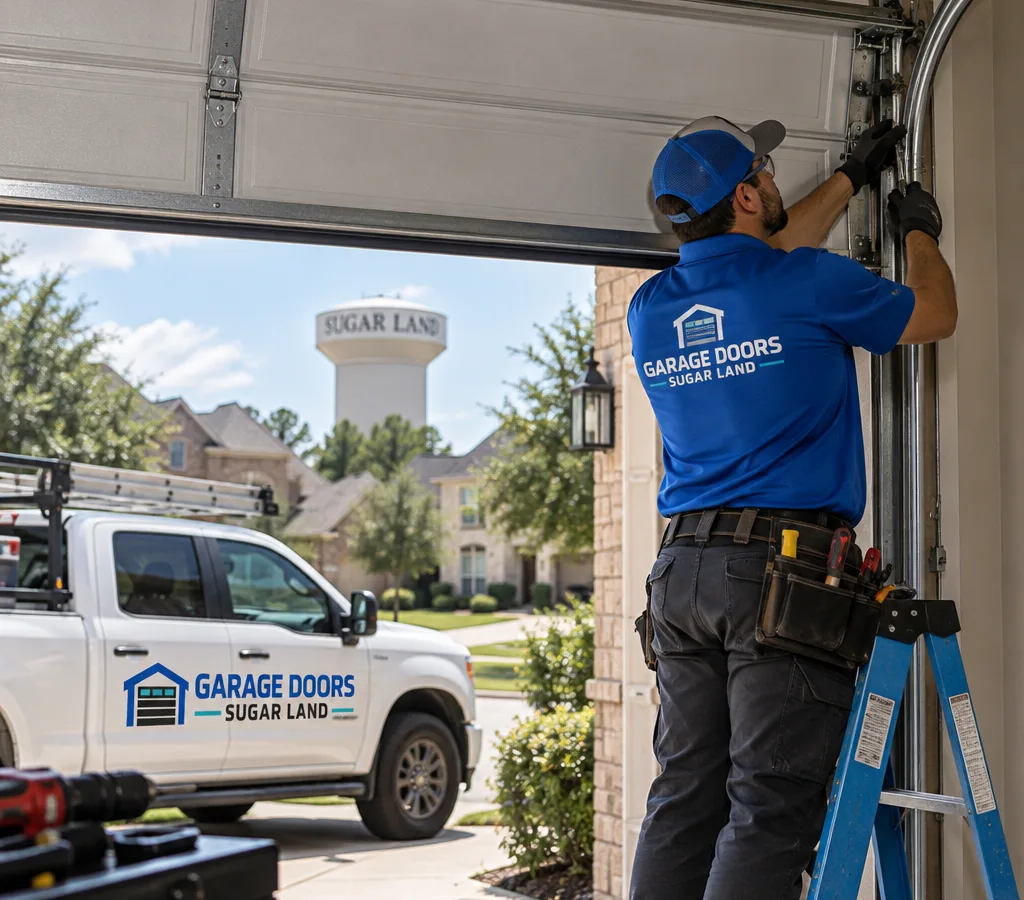
Roller repair scope
If your garage door suddenly sounds louder, shakes on the way up, or feels like it hesitates in certain spots, worn rollers are a common cause. Garage door roller replacement in Stafford is usually about restoring smooth travel in the tracks so the door opens evenly and the opener is not fighting friction.
Rollers are the small wheels that ride inside the vertical and horizontal tracks on both sides of the door. Each roller sits on a stem that fits into the door hinge. Over time, the wheel can wear flat, the bearings can seize, or the stem can loosen. When that happens, you may notice:
In Stafford, garage doors run hard through long stretches of heat and humidity. That alone does not ruin rollers, but it can dry out lubricants faster and make small alignment issues show up as noise sooner. If the door is also used as the main entry for the house, those extra cycles add up.
Garage Doors Sugar Land is a referral service. When you call, you describe what the door is doing and any safety concerns—stuck shut, stuck open, a loud bang, or a door hanging unevenly. We then connect you with an independent local contractor who handles roller replacement and related garage door repair.
Some roller issues overlap with other problems. A door that binds can also have track alignment issues, hinge wear, a bent shaft, or a spring imbalance. A good first step is an on-site check of door balance and track condition before swapping parts. If you're dealing with multiple symptoms, explain what you see once, then talk directly with the contractor about options.
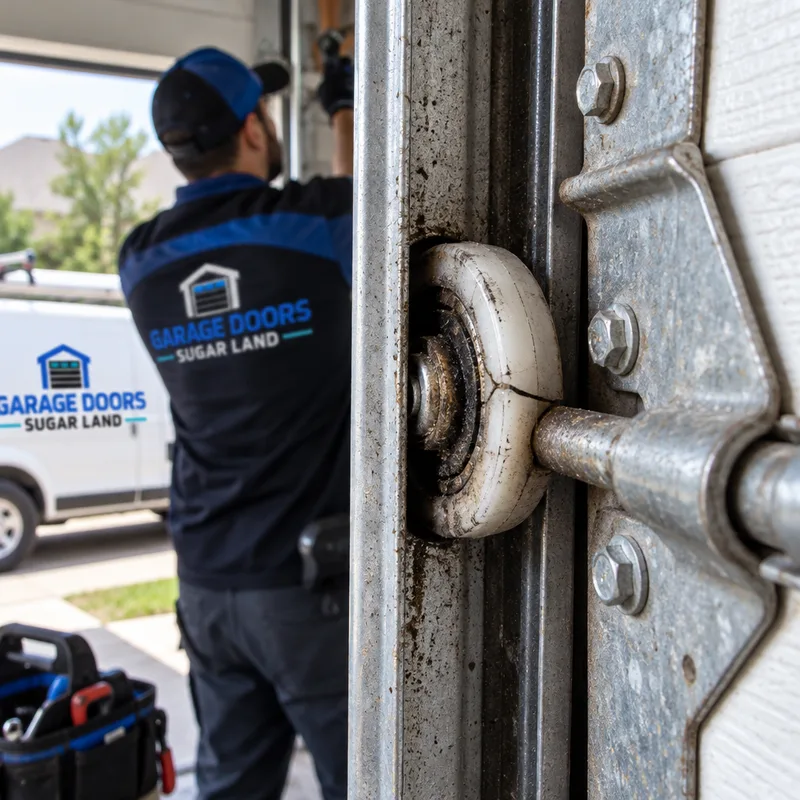
Before replacement
Tracks are checked for dents, spread, loose lag screws, and gaps at the joints. If the track is pinched or pulled out of plumb, new rollers can still bind.
The contractor matches the roller wheel size and stem style to your door hinges. Wrong stem length can change how the door sits in the track at the curve.
Worn hinge knuckles, loose hinge screws, or rough end bearing plates can mimic roller noise. These parts are looked at while the rollers are out.
If a door is cocked or drifting, the lift cable may not be winding evenly on the drum. Roller replacement is a good time to verify the cable path looks correct.
Rollers do not fix a door that is heavy or shoots up. A balance check helps separate roller friction from spring or opener strain.
Replacement sequence
Step 01
On the call, it helps to mention door type (single or double), whether the rollers are nylon or steel, and what you hear or feel (grinding at the top curve, shaking, sticking). If the door is stuck, say whether it's stuck open or closed.
Step 02
The contractor typically inspects tracks, hinges, and the spring system, then identifies which rollers are worn and whether track work is needed first.
Step 03
Roller work involves working near moving sections and, on torsion-spring doors, near hardware under load. The door is secured so sections don't shift while rollers are swapped.
Step 04
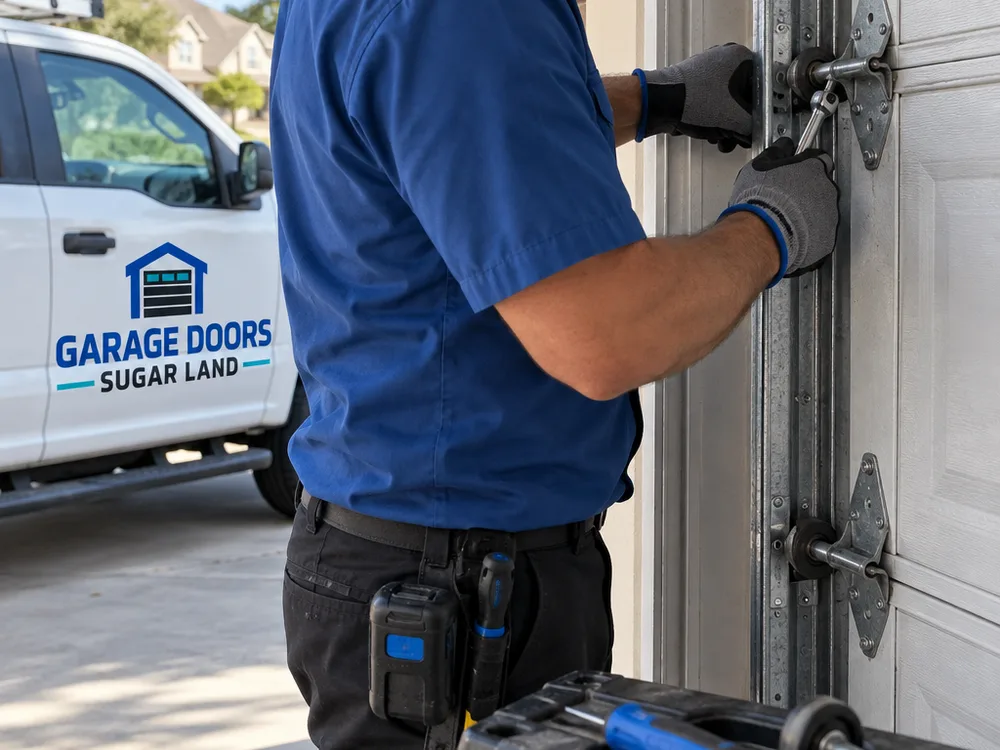
Old rollers are removed section by section, new rollers are installed, and hinge condition is confirmed. If any hinge holes are stripped or hardware is bent, the contractor may recommend addressing it so the new rollers track correctly.
Step 05
After installation, the door is cycled by hand and with the opener to confirm smooth travel, consistent clearances, and quieter operation. The contractor can tell you what to lubricate and what to leave dry.
If your garage door is squealing, wobbling, or catching in the track, describe what's happening once and get connected with a local contractor who handles roller replacement in the Stafford area.
CALL NOW: (346) 226-2846Roller work and hardware
Common questions
Roller noise usually shows up as a consistent squeal, grind, or rumble that follows the door's movement, especially through the curved section where the track turns horizontal. A contractor will also check for track rub points, loose hinges, and an unbalanced door, because those can make new rollers noisy again if they are not corrected.
Replacing rollers as a set is common when wear is spread across the door, because mixed old and new rollers can make the door track unevenly. If only one roller is damaged—such as a cracked wheel or seized bearing—the contractor may discuss a targeted replacement and what else should be watched next.
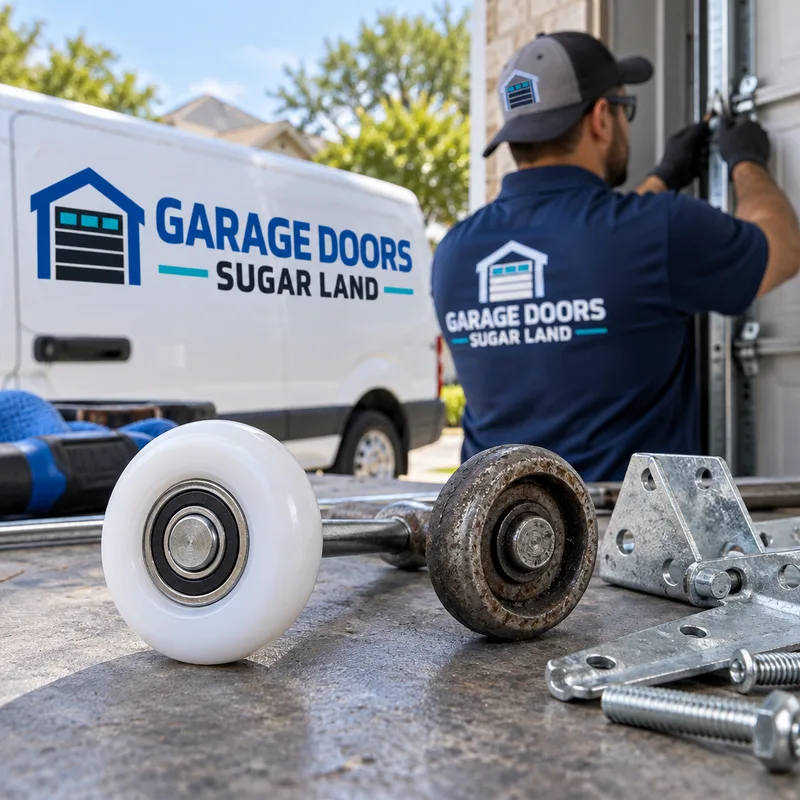
Most recommendations come down to nylon versus steel wheels and the type of bearing (standard or sealed). Nylon rollers are often chosen to reduce noise, while steel rollers are sometimes used where impact resistance is a priority. The contractor who takes your call can match the roller stem and wheel size to your door's hinges and track.
It can be, because the door sections can shift and pinch, and you are working next to moving hardware under load. Some roller changes require loosening hinges or working near bottom brackets where lift cables attach. If you're not sure which hardware is under tension, it's safer to have a contractor handle it.
If the door is stuck open, stuck closed, off track, or hanging unevenly, treat it as a safety issue and avoid forcing the opener. Call and explain exactly what position the door is in and whether you heard a bang or saw a cable slack. We can connect you with a local contractor who handles emergency garage door repair in Stafford-area situations, and you'll speak with them directly about next steps.
A quick description helps the contractor prepare: door size (single or double), whether you have one door or multiple, what the door is doing (binding at the top, shaking, loud squeal), and whether the opener is belt, chain, or screw drive. If you can safely take a photo of a damaged roller or bent track, mention that so you can share it when you speak with the contractor.
Sometimes, but not always. Rollers that bind can stop the door short, but incomplete closing can also come from photo-eye alignment, travel limits, a bent track, or a door that is out of balance. The contractor will usually test the door by hand to separate roller friction from opener settings and safety sensors.
If your garage door is loud, jerky, or catching in the track, describe the problem once and get connected with a local contractor who can assess the rollers and handle the repair.